Key points
- Trade names and botanical names are not always used consistently.
- Ceylon cinnamon is Cinnamomum verum and is native to Sri Lanka.
- Chinese cassia, Korintje and Saigon cinnamon are commercial cassia-type products.
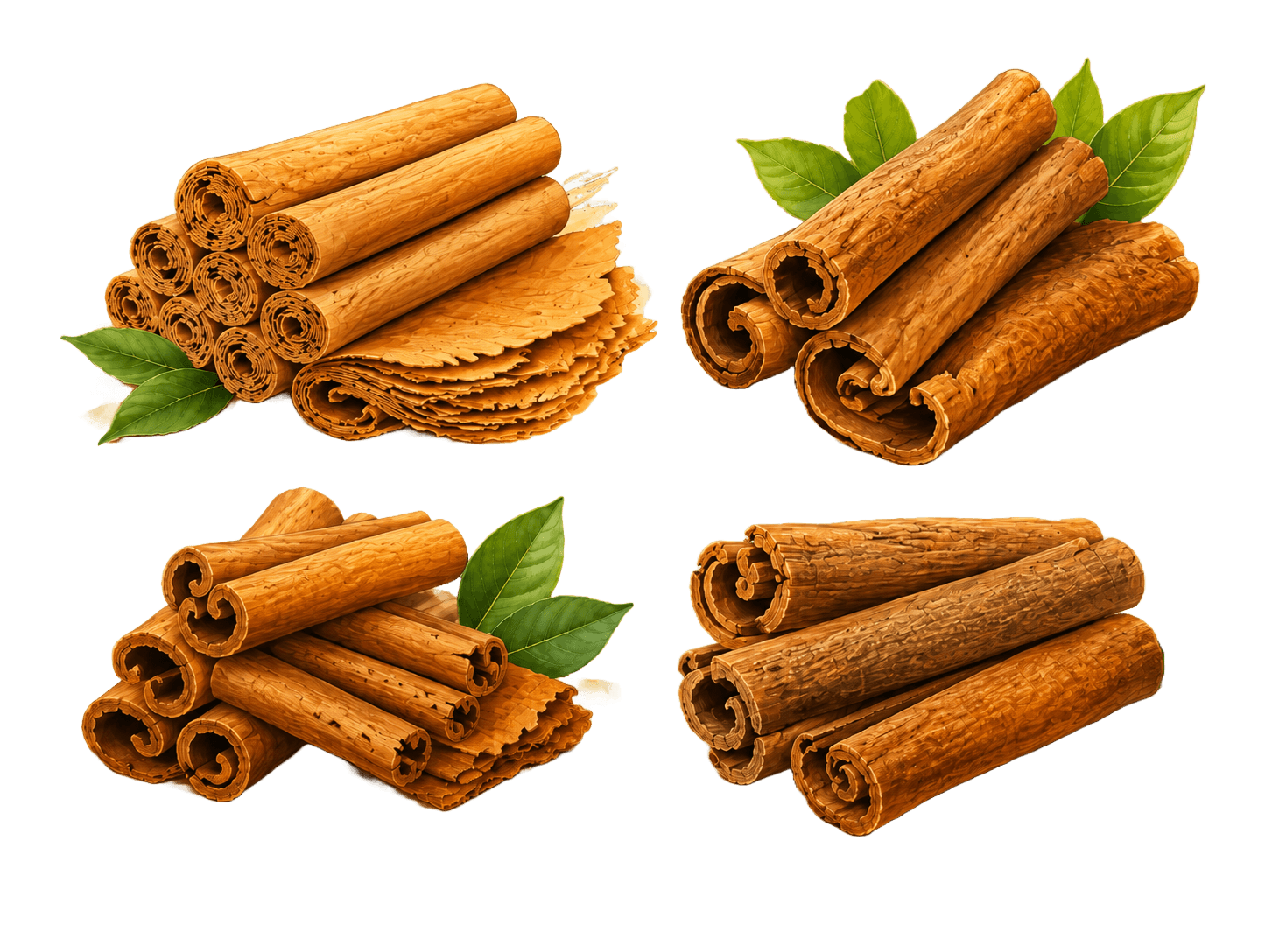
- Whole bark gives visual clues that powder cannot provide.
- When species matters, rely on verified documentation or suitable testing.
Important terminology note
Trade names and botanical names are not always used consistently. When species matters, rely on verified botanical documentation or suitable testing rather than the word cinnamon alone.
Ceylon cinnamon
Common name: Ceylon cinnamon or true cinnamon. Botanical name: Cinnamomum verum. Older synonym: Cinnamomum zeylanicum. Native range: Sri Lanka.
Its typical form is thin pieces of inner bark assembled into a multi-layered quill. Colour is usually tan to light brown, and the flavour is generally described as delicate, sweet, lightly citrus-like and less forceful than common cassia types.
Common uses include tea, desserts, chocolate, delicate infusions, rice, curries, beverages, gifting, premium retail and applications where the layered quill is valued.
Chinese cassia
Common names include Chinese cassia and Chinese cinnamon. Cinnamomum aromaticum is commonly used; Cinnamomum cassia also appears widely in trade and literature.
Its typical form is thicker, harder bark, often forming a strong single curl. It is used in baking, spice blends, savoury dishes and applications requiring a bold cinnamon profile.
Indonesian cinnamon
Common names include Indonesian cinnamon, Korintje and Padang cassia. The botanical name is Cinnamomum burmanni.
It has cassia-type hard bark, often reddish brown, with a familiar warm and sharp cinnamon profile widely used in North American baking and commercial spice blends.
Vietnamese cinnamon
Common names include Vietnamese cinnamon and Saigon cinnamon. The botanical name is Cinnamomum loureiroi and the native range is Vietnam.
It has thick cassia-type bark and is usually described as especially intense, sweet-hot and aromatic.
Comparison table
| Type | Botanical name | Native range | Typical bark structure | Typical intensity | Typical use |
|---|---|---|---|---|---|
| Ceylon cinnamon | Cinnamomum verum | Sri Lanka | Many thin layers | Delicate | Tea, desserts, premium retail, whole-quill presentation |
| Chinese cassia | Cinnamomum aromaticum / C. cassia in trade | Southeastern China to Vietnam | Harder thick curl | Strong | Baking, blends and savoury dishes |
| Indonesian Korintje | Cinnamomum burmanni | Southern China through western and central Malesia | Cassia-type hard bark | Warm and sharp | Bakery, cereal and ground-cinnamon blends |
| Vietnamese Saigon | Cinnamomum loureiroi | Vietnam | Thick cassia-type bark | Very intense | Baking, beverages and strong desserts |
Why the label alone may not be enough
- The word cinnamon may cover several species.
- Ground products lose the visual differences visible in whole bark.
- Country of packing is not always country of cultivation.
- Commercial buyers may require documentation or testing.
- Natural flavour, colour and chemistry vary by crop and processing.
Which cinnamon does CeyQuills supply?
CeyQuills focuses on Ceylon cinnamon, Cinnamomum verum, sourced in Sri Lanka. Product form, official grade reference, available lot details, packing and shipment documentation are confirmed for each quotation.
Sources and further reading
Cinnamomum verum
Supports botanical naming and Sri Lankan native-range context for Ceylon cinnamon.
Kew Plants of the World OnlineCinnamomum aromaticum
Supports botanical naming and range context for Chinese cassia.
Kew Plants of the World OnlineCinnamomum burmanni
Supports botanical naming and range context for Indonesian or Korintje cinnamon.
Kew Plants of the World OnlineCinnamomum loureiroi
Supports botanical naming and Vietnam-origin context for Saigon cinnamon.
Related guides
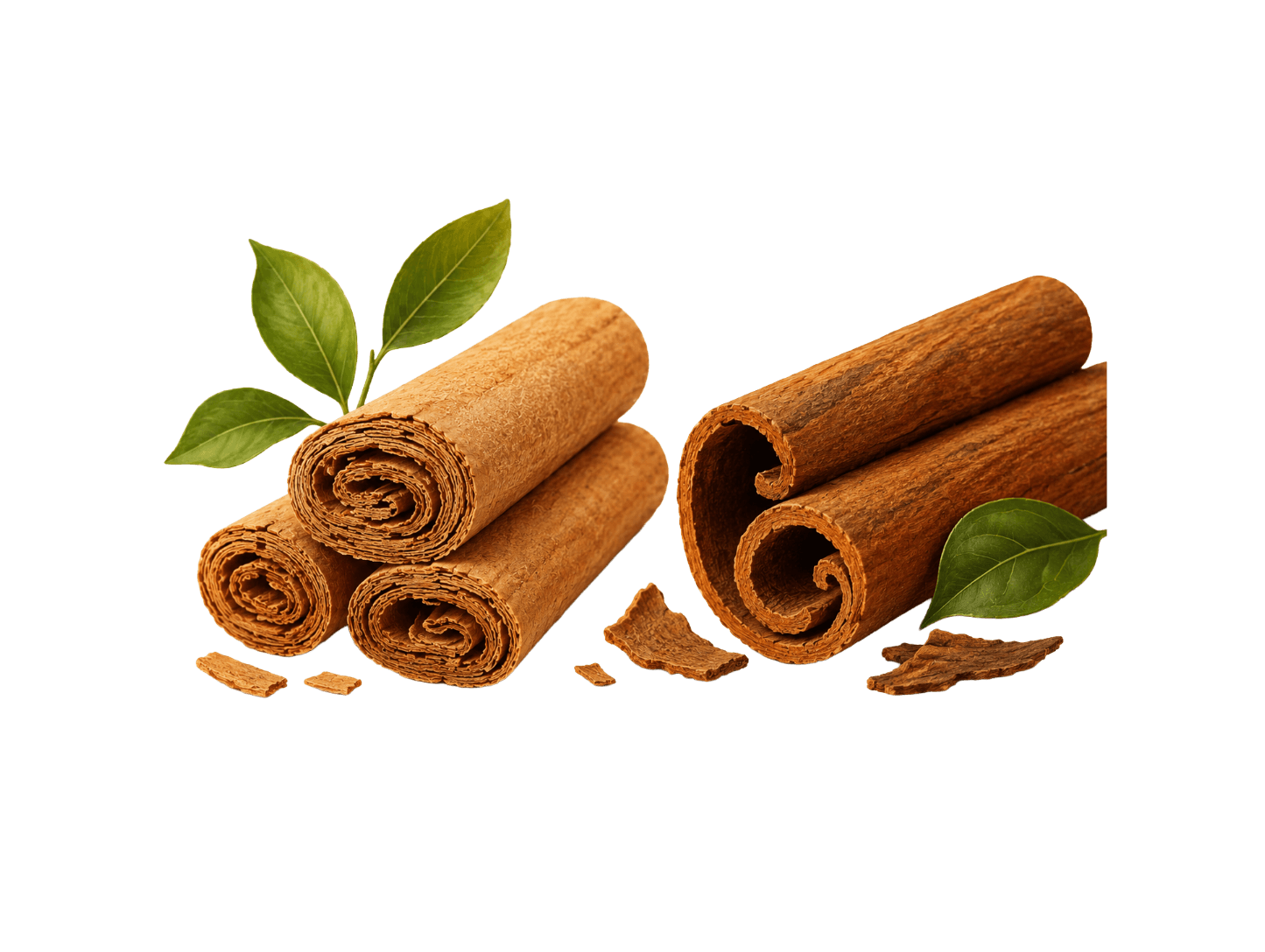
Ceylon Cinnamon vs Cassia
Learn how bark structure, botanical species, flavour profile and the coumarin discussion differ between Ceylon cinnamon and common cassia varieties.
7 min read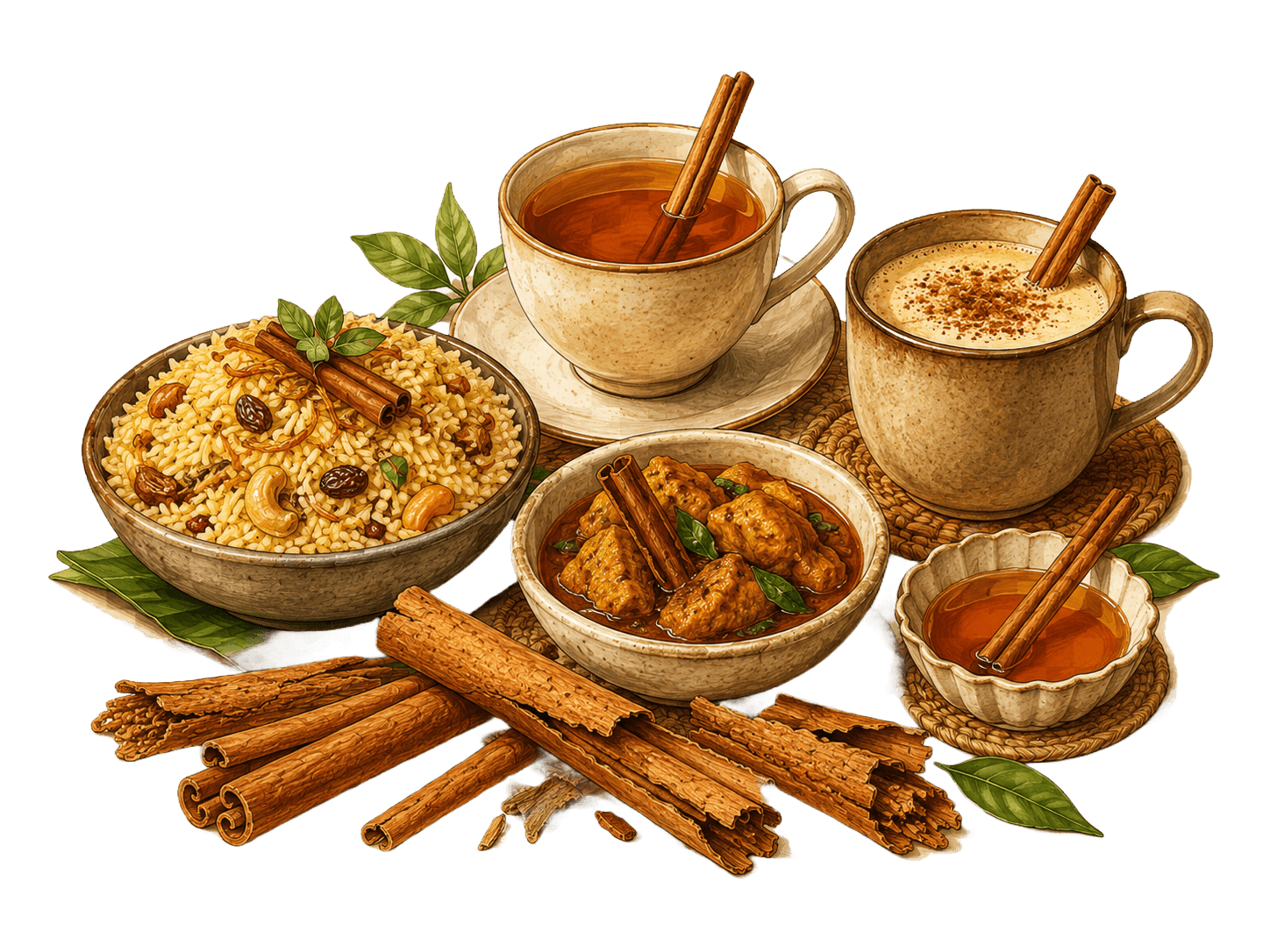
How to Use Ceylon Cinnamon Quills
Use whole or broken quills in tea, coffee, rice, curries, stews, syrups and desserts.
7 min read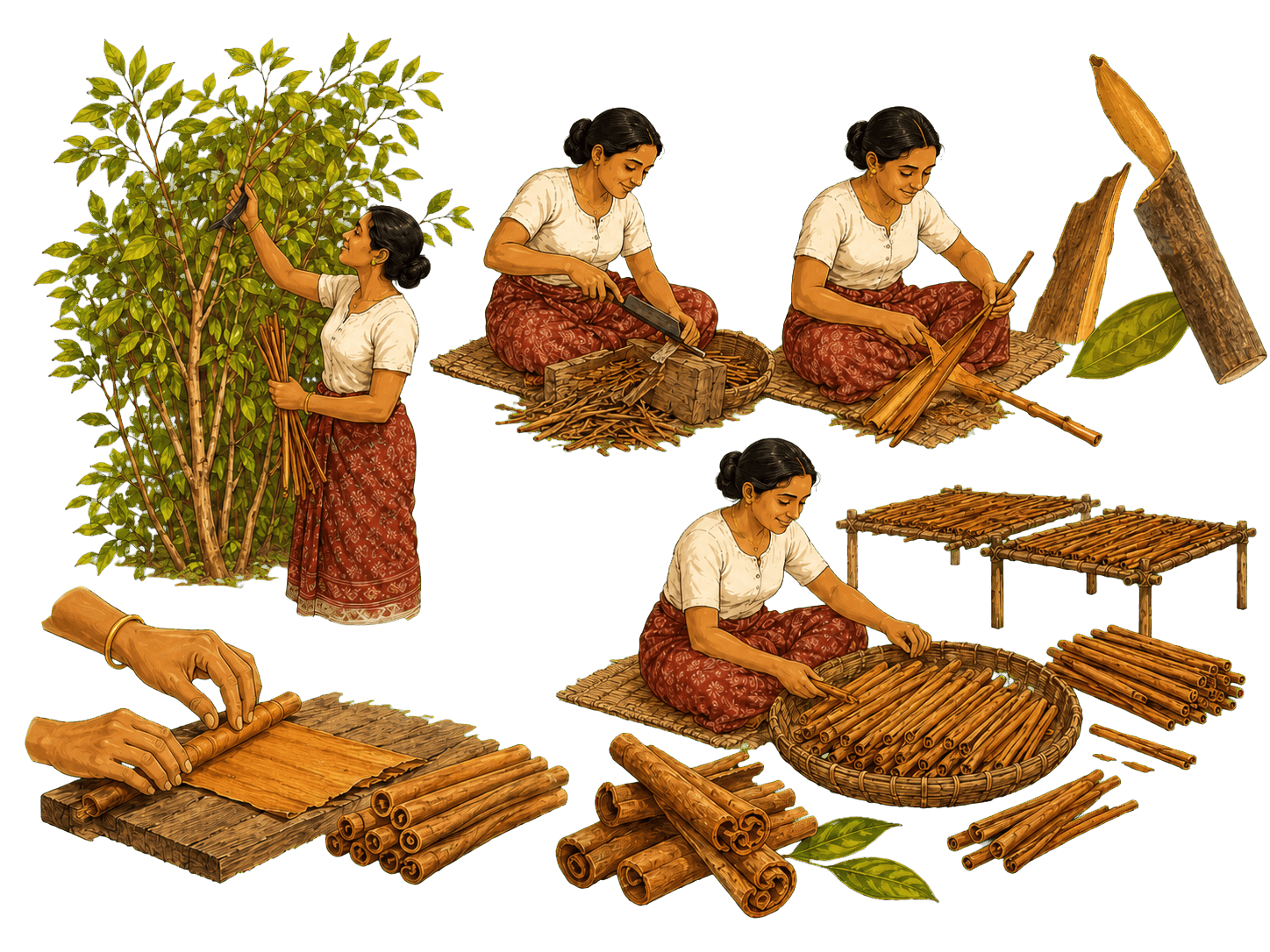
How Ceylon Cinnamon Is Made
Follow the process from harvested stem through scraping, peeling, rolling, drying and grading.
9 min read